BTW my birthday is in April.
See my belated Christmas present >> New Bombay Pilothouse Project
Click below to see Swantown Marina and ramp in Olympia, WA

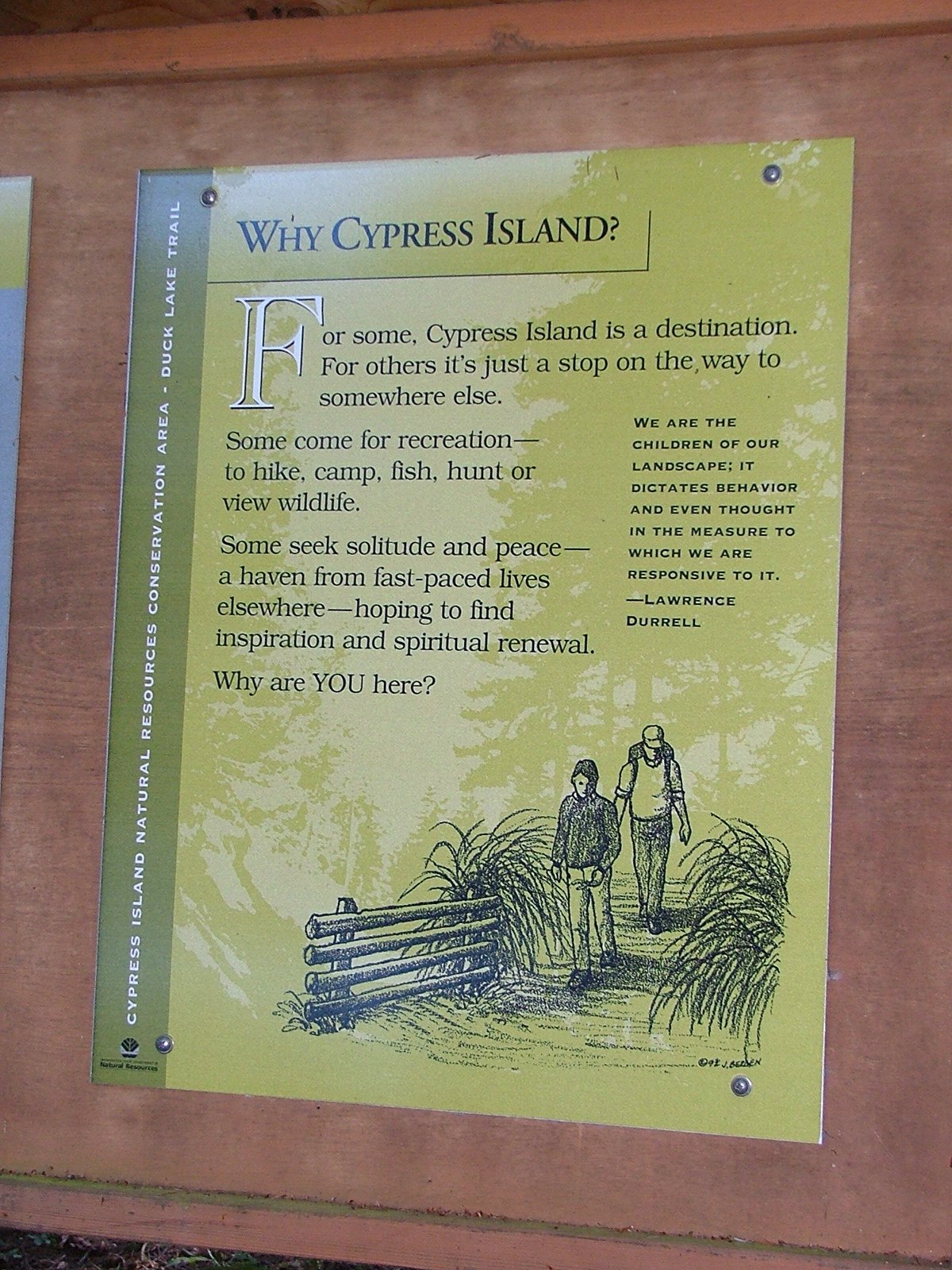
This selection of images is from Pelican Beach on Cypress Island. The beach is very dinghy friendly. Pelican Beach should be visited for one hour or overnight, or you are missing out on something truly special.


If you are a kayaker and your kayak paddle is getting heavy, or you're in a putt-a-putt puttster boat and need another knot of speed, you should know that the current pretty much always flows north in Burrows Bay.
Don't believe me, check your current atlas and find a day of the year or time of day that the current is forecast to flow south.
What this means is that when you are cruising from Deception Pass north to Anacortes, or anywhere north, in Rosario Strait, it will pay you to come in close to the eastern shore and get a little boost. Of course, if you're heading south, you should stay out in Rosario Strait.

Hugging the shore in Burrows Bay will get you about 4 miles of free current to ride. Wouldn't it be great if all the channels and passages were this helpful? This back-and-forth tidal thing is fun for a while, but it doesn't always keep to my schedule.
Using common sense and smart practices, just about anything that floats has a time and place. Hobie 16's - ski boats - inflatable kayaks, war canoes, and hundred-foot palaces, all work for cruising and boat camping in the San Juan Islands.


Being prepared sometimes means simply changing your schedule so as to not get caught in the middle of Haro Strait during a blow. Or worse, accepting your fate and being forced to spend an extra night at Jones Island, or Rosario, while the weather gods sort out the big plan.
We once passed a couple of young men paddling their becalmed little 16' sloop part way between San Juan Island and Stuart Island. The current was helping them along at about 1 mph and they had six or more hours of daylight left. Later that afternoon we noticed they had tied to the dock a few boat lengths down from us, apparently none the worse. That night one slept on the dock and one in the boat. The next morning, they were comparing who had the most uncomfortable sleep.
Sometimes we see groups in open long boats from local camps, they will come ashore to unload gear and then using an anchor and long rope loop, pull their boat out to deep water for the night.
I have seen ski boats so overloaded with camping gear and people that they have no reserve buoyancy, essentially they are waiting for a rouge wave or wake to sink them. Small boat cruising is perfectly acceptable, but you still must follow basic boating seamanship and safety rules.
A sailing partner of mine in Portland wants to bring his Hobie 16 to the San Juans. My first thought was --your going to freeze to death-- but then I remembered he uses a wet suit. He asked if I thought a 1 hp outboard could be rigged up for an auxiliary (about 25 lbs I think) I said why not, as long as you don't weigh yourself down with camping gear, all you need is 1 hp, a gallon of extra fuel, wet suit, booties, gloves, hand held waterproof VHF radio, and a dry bag (or two).
But if he flips the boat and needs help, he could be in trouble and all Hobie Cat sailors like to fly a hull. I suggested he travel in company with other boats, so they could carry his camping gear and cruise nearby for emergency's, just in case.
We came across a family with a dog in a canoe halfway to Patos Island, gutsy or foolish, maybe just ignorant, but they were a long way from land.
Dealing with customs;
About the most important point I can make is that you should not let customs check-ins impact your plans.
Except for the obvious route planning details, its not a big deal. Some places in Canada you can check in after hours using a special phone on the dock.
Sometimes you will see a Good Samaritan pull over to offer help. There’s a certain concept floating around that if you help someone out of the goodness of your heart, it’s like putting money in the bank, so to speak, money you will draw upon in the future in your own time of need. Often called “paying it forward,” it sounds about right, right. Well, not really, if you’re just banking goodwill, then it’s not really out of the goodness of your heart.
If you are a newbie to cruising or boating you may be hesitant to offer a helping hand, don’t be. The people in distress will appreciate the offer and may well be hoping someone will help them out. Help can be as simple as handling a dock line when they arrive to helping rebuild a balky pump, or giving a tow.
 |
| Turn Point lighthouse on Stuart Island |
A cruising couple appeared at our boat early in the morning while I was having coffee in the cockpit. They gave us a large chunk of warm carrot cake. It was delicious, hitting the spot perfectly. Possibly I was receiving some interest on my account, what do you think?
Carry a
knife and marlinspike on your belt at all times (not in your pocket, and
not down below in your bag). You need it ready to use in an instant. A
knife will cut through sailing rope or free a Genoa sheet wrapped around
your leg. The marlinspike helps pry open strands of rope for splicing.
Folding knives with a 3" blade and marlinspike are fine, but require two
hands to open and close. A better choice would be a straight blade,
rigging knife with a 3" blade and a separate marlinspike in a sheath.
Always secure a knife with a lanyard to your belt. This keeps it
attached to you even if it slips out of your hands. This can be critical
if you have to go aloft or slip over the side with a rope wrapped
around your leg (this has happened more than once to sailing crews offshore!)
Pack your own PFD and sailing harness. Do not rely on the sailboat you
crew aboard to have a spare. Try on several inflatables and find one
that's easy to adjust and comfortable. Simulate sailing motions when you
put it on. Squat down, lean over, raise your arms above your head, and
pretend you are grinding on a sailing winch. It must hug your body and
give you comfort at all times; otherwise, you will not wear it!
Purchase
a separate sailing safety harness. Better, find an inflatable PFD with
an integrated harness. Make sure it has oversize D-rings rated to a
breaking strength of at least 4,000 pounds. A separate harness should
mold to your body like a glove. Again, do not rely on the sailboat you
will board to provide you with a safety harness that fits your body.
Ask
the sailing skipper if there are tethers already onboard. The tether
attaches to your harness D-ring and then clips onto a jackline ( a long
piece of line or webbing that runs from bow to stern). If you need to
make your own, use webbing or three-strand sailing rope. Make one tether
4' long and the other 6' long. Attach strong one-handed clips with a
breaking strength of at least 4,000 pounds to the end. Attach the other
end to the harness D-rings with an oversized snap-shackle. Attach a
lanyard to the snap shackle for quick-release, in case your tethers get
hung up, and you need to shed them fast.
You
need protection from the sun, the cold, and rain. Double everything you
pack for cats and hats. You can expect to lose at least one hat over
the side on each trip. Pack two peaked caps, a good brim hat, like those
made by Tilley, and two or more knit watch caps. A good brim hat
provides more protection in the Tropics than slathering sunscreen on
your face and neck.
At nighttime, even in summer, the sea weather
will cool more than you ever thought possible. A good watch cap will
keep you warm. Those made by a company like Under Armour are microfibers
that breathe and provide comfort without sweating (which will cause
your body to cool!).
Pack a full
set of foul weather jacket and bib-pants. Match the jacket and pants to
the type of sailing. Use lighter gear for tropics and heavy gear for
cold weather passages. Go for the "breathable" type fabrics that protect
you, but allow air to circulate next to the skin to help lower
perspiration.Ask the sailing skipper if you should bring sea-boots.
Pack
thick, heavy socks to wear with sea boots. These protect your heels to
ward off blisters. Under layers should be considered part of any foul
weather gear offshore equipment. You need garments that wick the sweat
from the skin to keep you dryer and prevent cooling. In warm or cold
weather, go with the modern microfiber synthetics for superior comfort
beneath your foulies.
Unless you
sail all the time, your hands will not be used to handling the sailing
ropes of synthetic material common on sailing yachts. These can cause
blisters or "rope burn", where the line runs out fast between your
hands, peeling away the skin.
Purchase full length sailing
gloves--also called "3/4 length"--that cover all except the tips of your
fingers. These offer the best protection when working sailing sheets,
halyards, and boat anchoring rode.
Crazy
as it sounds, zip-lock type bags are worth their weight in gold. Pack
10-20 of these. Use them to segregate clothes so you don't have to dig
in a bag (i.e. one for socks, one for underpants, one for t-shirts) Use
them for dirty clothes to cut down on odors. Seal wet clothes inside
until you have a chance to dry them. Fill them with valuables like your
wallet and cellphone. Zip up snacks inside for late-night watches or
quick meals when it gets rough.
Make any zip-lock type bag more compact or keep foods fresh longer with these three easy steps:
1. Seal all except one-half inch of the bag. Press as much air out of the bag as possible
2. Insert the straw into the opening. Seal the bag next to the straw with your fingers.
3. Suck on the straw to remove the rest of the air. Seal the bag as you withdraw the straw.
If
you need to leave the boat in an emergency, you need one bag that you
can grab-and-go. Use one of your zip-lock bags for storage. Include your
wallet, keys, passport, visa, cellphone, and a separate notepad with a list
of emergency contact names and phone numbers (this should include your
insurance policy # and phone numbers, doctor's name and numbers, pharmacy
numbers), cash, travelers' checks, and at least 10 days of medications.
Pack
some form of seasickness prevention for any offshore trip. More than 66% of
all sailors experience some form of seasickness (mild to severe) in
rough weather. You must be able to stand watches, help with sail changes
or reefing, and work with the sailing crew, even when you aren't
feeling your best.
Use the mildest type of seasick remedy that
gives the maximum effect. Start with natural, non-medication forms of
seasick prevention (ginger, emotional freedom technique (EFT),
wrist-pressure bands). Next, consider over-the-counter types of
medication. If necessary, use prescription medications.
Check with
your doctor before taking any type of seasick medication--even the
natural forms. Each individual has a different body chemistry, and you
want to be on the safe side. Start your medication at least 24 hours
before you set sail so that it will be in your bloodstream before you
leave the pier. Keep hydrated at all times to lessen the onset of
seasickness.
Carry your
own flashlight. Buy one of the small high-intensity lights that come in a
sheath. Look for those with pop-on, pop-off red filters. You need red
filters to keep your night vision in tact. In addition, purchase a
head-band type light with the same features--high intensity white light
with a toggle for red filtered light.
Use the head-band light for
hands free chart navigation, engine space maintenance, and to check sail
trim at night. Pack at least three changes of batteries for each type
of light. Buy a plastic soap dish, place the batteries inside, and strap
them shut with heavy-duty rubber bands.
Use these ten sailing
tips to know the absolute essentials you need to pack for any offshore
sailing trip. You will be able to enjoy your time underway worry-free,
with the knowledge that you are ready for whatever comes you way!
================
Courtesy of: Captain John teaches sailing skippers the
skills they need to learn to sail like a pro!
This was going to be the best boat trip ever. We are headed to Roche Harbor in the San Juan’s, where we will join in the fun, celebrating with 1,000’s of boaters from all over the Northwest and beyond. And it really was a great trip, just not the one expected. Roche Harbor (yes, pronounced “Roach”) is a destination resort for boaters and non-boaters alike, nestled on a fairly large protected bay on the northwest corner of San Juan Island in Washington State.
Having done this 275-mile drive many times, we have developed a system and are not in a hurry, after all, we are on vacation. We left Portland late in the morning, breezed through Seattle traffic, and arrived at Cap Sante Marina in Anacortes ready for dinner. The first thing we do is make sure “Windsong” is still floating in our slip and that the batteries are fully charged. After checking out the boat and stowing all our "must-have" gear and toys, we head for one of the many restaurants we have become familiar with. When we first started exploring Anacortes, some locals had recommended the bowling alley as the best place to get a good and sizable meal, and I can’t disagree, but we thankfully found that other places deserve our business as well, especially if some sort of ambiance is on your menu.
Don’t forget coke and, chips and trail mix, cookies and hot dogs and everything else. So it’s decided once again that everyone will help with the shopping. After dinner, we parked in the parking lot at the top of the ramp leading to the boat, and we split up. I haul another load to the boat while the rest of my crew walks across the street to “Safeway.” Having a major grocery store nearby is a great benefit. By the time I get to the store, they have filled a cart with a week’s worth of really wonderful, great stuff. Where’s the fruit, wine, cheese, and M&M’s I want to know? It’s getting dark as we haul our loot across the street and down the long floating walkway to the boat. It’s never boring at a moorage, there is always someone to talk to, some weird, strange floating craft to look over, or something in the water to check out. We finally get everything packed away, “Windsong” is sitting much lower in the water, the children have staked out their overlapping territories, the moorage has become quiet, and we can hear muted conversation drifting across the calm water. It’s time to open a bottle of wine and relax in the cockpit, “no I say” You can’t have a coke, as I pull out the cork.
I slide the hatch open to see, not sunshine, but fog, which means grab a coat, everything is wet and cold. Hopefully, this is the last time I walk up the ramp today. Inside the Safeway is a Starbucks, where I purchase two steaming cups of strong black coffee. I really, really don’t like Starbucks coffee. A baker’s dozen donuts to go, and I’m back at the boat with breakfast. A quick final check of boat systems and I cast off, Linda is up, Jaiden and Kailey are still asleep, or at least they pretend to be asleep, the idling diesel motor is noisy, bangs, shakes, and rattles everything within its reach.
Roche Harbor is about 26 miles, six or seven hours of motoring, even longer, or not even possible if we sail. Today is the 3rd of July, and we plan to spend the night at Jones Island Marine Park. Normally, sailboat travel in the San Juan’s involves planning your trip around constantly changing tides and currents, which make a big difference in the time it takes to get somewhere and the fuel you use. But for us, this is the second day of our vacation, and we’re heading out regardless of the current. Almost immediately, we are swept into the outgoing tidal current and are whisked along at twice our normal speed. Ah, good planning, skipper. The fog is limiting our visibility as we cut across Rosario Strait heading for Thatcher Pass.
More good planning, skipper. We have a reliable GPS that will help keep us off the rocks. The fog is pea soup now, visibility is only a hundred feet or less. Just three or four times the length of the boat. We are essentially running blind. As we approach Thatcher Pass, I maneuver very close to the invisible shore. Everything is white, and I am dripping wet from condensing fog. What a great trip. We are constantly monitoring the depth sounder and GPS, staying in shallow water, we work our way further into the pass. The boat is moving slowly as we feel our way along. I’m glad the current is against us now or we would be pushed along faster than we could stop or turn should we need to. Our senses are acutely tuned to the situation at hand. I know the ferries can’t come this close to shore, my worry is other nuts like us groping blindly along. If we encounter a boat moving fast we will collide before we can take action.
In a matter of a few feet, we slip into a bright sunny day. Visibility is unlimited; we are a few hundred feet offshore. (too close) But no ferries.
The rest of the way to Jones Island is pretty routine. We pass by Friday Harbor, steer clear of several ferries, and lots of boats. All of Jones Island is a Washington State Park and my favorite place to visit.

The cove is protected, the dock is long enough for six or so boats, and there’s plenty of room to anchor. On shore the deer are friendly and some will let you pet them. There are campsites and fire pits, running water, toilets, and trails. Roche Harbor is just a short way further, we will leave around noon tomorrow, I want to get there in time to claim a good spot to anchor, and then dinghy to shore to visit the sculpture garden. The flag ceremony will be at sundown, for several years I have wanted to be at the flag lowering and watch the color guard. I know they fire a cannon as part of the ceremony.
Minutes later, “Windsong” ghosts up to the only spot available and we toss our lines to willing helpers on the dock. We are set for the night. Jaiden and Kailey head for some tide pools still exposed from low water.
Linda and I take off on the trail across the island, we see several deer in the woods. The campground on the other side of the island is used mostly by kayakers because it has no dock and the cove is not very big or protected. Sometimes we see groups huddled behind tarps trying to get out of the wind. We wonder if they know that they can paddle around to the other side where there is no wind at all and lots of great campsites. We pick a hand full of apples from the small orchard and walk back into the woods planning to feed the deer. The apples are not ripe, they are small and very hard. I’m not so sure they like them this early. As we walk back towards the cove we try to hand feed a deer but it shies away. I leave some cut up apple pieces on a log. The next day I see the apple pieces are still untouched, the raccoons must not be fond of tart fruit either. Sorry guys, All I have on the boat are M&M’s and chips. Jaiden and Kailey are busy on shore with some new friends, this is a good time to do some reading.
It has been really exhausting doing nothing all day. In the morning I want to sleep in but the desire for my own coffee gets me up and soon we have our drip coffee maker happily sitting on the burner. It seems to take forever for the 12 cups to drip into the pot. At home we have a timer and the coffee is ready when I get up. This camping is cruel. Finally, cup in hand I walk down the dock, other boaters are up and about, and some are leaving for parts unknown. Some boat campers are onshore in tents. The dock has a spot designated for dinghies used by boaters that are anchored. Dinghy docks never have enough room so boaters just tie their dinghies as best they can. Windsong is tied up in a 30 minute parking/loading zone between the hours of 8:30 am to 3:30 pm. It’s getting close to 8:30 and one of my crew is nagging me to do something. Luckily the boat in front of us soon prepares to leave and as he pulls away from the dock I simply pull Windsong forward to the newly vacant space. “Happy?” I say to the crew. Now we can park for 14 days.
The over night fee is $1.50 per foot. Windsong would cost $45 per day but there’s not a chance in the world that space is available. Our plan is to anchor as close as possible so rowing the dinghy is not too hard or far. It’s time to go I decide, everyone that needs to go ashore better get going, we need to leave. Suddenly I’m in a rush, the anxiety of not knowing our accommodations at Roche has got me tensed up. This is not why I go boating. I’ve checked my current charts and tide predictions, but once again it doesn’t matter which way the water flows, we're on a mission, a quest. Hurry up, let's go I say again.
Soon enough Windsong floats across the shallow shortcut on the east side of Pearl Island and we get a full view of the bay at Roche. Wow, what a sight, boats are everywhere. There must be a billion dollars worth of RV’s floating around us. I spot some Ocean Alexander yachts that I think sell for a million. (Years later I find out $15-20 million is more like it)
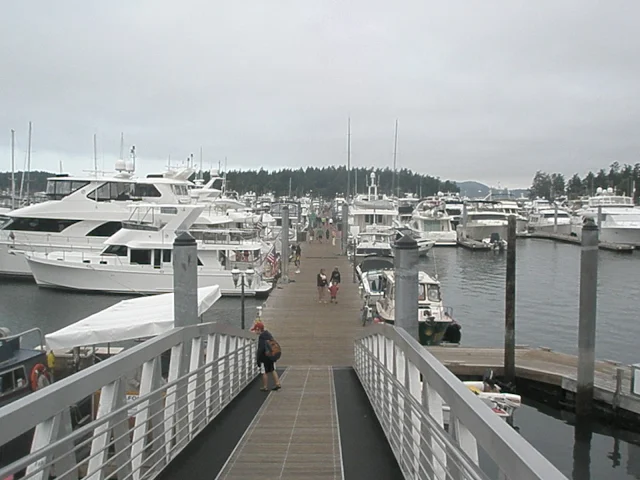
We see a motorized barge anchored with some warning buoys around it. That must be where the fireworks will be launched after dark tonight. We slowly motor around, taking stock of what is before us. I see, to the left of the massive rows of docks, several lines of boats rafting. There is a raft of about fifteen power boats lashed tight together, several rafts of three or four sailboats. Power boats and sailboats aren’t rafting together; it’s almost as if they don’t like each other. Dinghies are going to and fro, some fast, some slow, and many are overloaded to the point of ridiculous. At the end of one long raft is a gap about one hundred feet wide, and then lots of individual boats are anchored. It’s perfect for us. All the boats in this tight area are anchored fore and aft to keep them in line and from swinging into each other. We lower our plow anchor about seventy-five feet in front of where we want to be and slowly back up in our spot, paying out the anchor line as we go.
 |
| Not the fourth, just a busy weekend at Roche Harbor |
At the right point, I cleat the line hard and keep powering back, setting the anchor by forcing the plow point into the bottom. When Windsong shudders to a stop, I give the throttle a little boost to make sure we're dug in well. While I hold the boat in reverse, keeping her in place, Kailey pushes off in the dinghy with a folding grapple anchor and a floating yellow line. I instruct her to paddle to shore and wedge the anchor between some large boulders. We now have secure lines out the front and out the back.
After turning off the motor, it’s a simple matter to pull the boat forward with the anchor line until we are in line with all the other boats. And then taking up the slack at the rear to make sure we don’t move sideways. This is how all the boats in the line are anchored; there are so many yellow lines going to shore that it would be impossible to paddle a dinghy behind the boats without losing your head. In front of the line of boats is a clear, unobstructed passageway with a steady stream of dinghies and yachts moving back and forth from the resort. We have about fifty feet on each side of us to the next boats. I motion a hello gesture to one group and get a resounding “Having a great party, do you need a drink?” response. The response from the guy in the stinkpot on the other side isn’t friendly; he acts like we invaded his space and thinks sailboats should be sunk. Kailey ties the dinghy to our swim platform, and we are set for another night, or so I think.
There are hiking trails, a swimming pool, and flower gardens that wedding groups use. A short hike up the hill takes you to the grass airplane landing strip and a forty acre sculpture garden. We all pile into the dinghy and paddle off. The dinghy dock at the main moorage is full so we head for the little dock by the swimming pool. On shore we are just in time to watch the blind dinghy race. I wish we would have been earlier to join in, it looks like a lot of fun. The “Blind Dinghy Race” has two people in each dinghy, the one paddling is blindfolded the other one yells directions. All the racers start at a open stretch of dock and paddle away when the start gun fires. They paddle under an overhead walkway lined with spectators. The racers try to avoid the pilings and then turn around and come back to the start dock. Oars are flying, people are screaming, "left, left no the other left, now right, right" dinghies are colliding. Someone eventually claims the prize. A little later in the afternoon is a children’s only, balloon capture. All the participants and their dinghies are in a small area surrounded by docks and cheering parents. At the start a large quantity of big balloons is dumped into the open water and the children try to collect as many as possible into their boats. The one with the most is the winner, but all the children receive prizes. Pandemonium ensues and the balloon capture quickly deteriorates into a free for all with several kids going over the side trying to get balloons. Even in July only the most hearty and fearless swim in the cold San Juan waters.
 |
| Childrens balloon capture at Roche Harbor |
Eventually we stock up at the grocery store, buy some ice and head for the boat to have dinner. As daylight begins to slip away we are entertained by three Bald Eagles perched in the trees on shore behind our boats. The Eagles noiselessly glide down and snatch fish from the water and then with a few powerful wing beats are back in the trees. Repeatedly these majestic birds dodge dozens of taut yellow lines to grab a quick bite. Not once did I see an Eagle tangle with a line.
Several times in past years, circumstances or poor planning have caused me to miss the ceremony; finally, the stars have aligned for me, and on the fourth of July at that. This is a great trip. The kids will stay on the boat while Linda and I paddle ashore. I’m in the cockpit anxiously waiting to leave. When I look over at the unfriendly boat next to us, I sense that it looks different, it is about thirty-five feet long and fifteen feet tall at the flying bridge. I’m sure it gives the owner a sense of power looking down on our puny boat. The wind has been steadily increasing for the past hour and I suspect this boat is catching the wind and straining at the anchor lines, which would move it a little closer to us.
As I’m watching, I become sure it is half the distance it was. Now I know for sure, we have a problem; the boat is only ten feet away. There is nothing I can do. The other boat's anchor has broken out, and it is dragging into us, the last ten feet closes rapidly, and he is against us. I hold him off long enough to grab a fender and place it between us, saving us both from damage. I’m banging on his hull with my fist, trying to get their attention, but Linda tells me she saw them all leave earlier.
His surface area alone is probably greater than all our sails. I know our 5/8” nylon anchor line will hold, but our 35-pound plow could break out at any second. Then I glance at our braided yellow stern line, oh boy, it is stretched to the breaking point. It is so tight that it is only half the diameter it’s supposed to be. The line was never intended to take this kind of load. I had bought an inexpensive floating line for dinghy work, not this. The wind is picking up; if our stern line parts or anchor breaks free we are going to have two boats crashing into the line of rafted boats on the other side of us. I yell over to the rafting good-time party people and tell them "I have a serious problem, soon to become their problem too." They immediately jump into a couple of inflatable dinghies and begin pushing against the wayward, captainless yacht, relieving the tension on Windsong. Kailey gets in our dinghy while I untie our yellow stern line and hand it to her with instructions to paddle towards shore, making sure to keep herself and the line out of the way.
I start the motor and weigh anchor when I hear "ka-boom" as the cannon roars and the color guard completes the flag ceremony on shore. Rats, I missed it again.
Meanwhile, the boys in the inflatable dinghies have boarded the runaway wind-blown boat and found the ignition keys. They start the engine, raise the useless weed and mud-coated anchor, and motor away with the dinghies following. Once they clear out, I circle Windsong around and anchor back in the same spot, only this time there is lots more room without the big boat. Kailey rows the stern line over and we are back in business.
The party boys return in their inflatable dinghies minus the big boat. Curious, I ask them, “What did you do with the boat?” They said, "We took it to the customs dock and left it tied it to the red-painted area marked customs only”
We never saw the boat or the less-than-friendly skipper again. Pretty soon a sailboat anchors in the now vacant space beside us and rows a stern line back to shore. Life has returned to normal, Linda and I decided not to go ashore since we had missed the flag ceremony once again. The fireworks would be starting soon and we didn’t want to miss them, after all, we had a front-row seat.
FYI, a year or so later, but not on the fourth, I finally was able to watch a flag ceremony, the cannon firing took me by surprise. Later that evening a couple got married and then jumped off the high dock in their wedding clothes. Another great trip.
In the early days of exploring, Deception Pass was incorrectly charted as a narrow passage leading to a small bay. As it turned out, it was indeed a narrow spot, but it was not a small bay; it separated huge Whidbey Island from the mainland. The small bay turned out to be a massive inland sea running all the way to Olympia, much of which ebbed and flooded through Deception Pass.
From a boater's viewpoint on the water, there is no confusing which side is the one to use. Canoe Pass is much smaller and due to the curving cliff wall you cannot see all the way through. The water flow routinely exceeds 8 kts, (more on the Canoe side) which makes sailboat transits difficult without planning for slack tide and no current.
Cornet Bay has a large dock facility with boat ramps, picnic tables, restrooms and hiking. You may choose to tie up to the dock for a nominal fee, or anchor for free. We arrive at and enter Deception pass on our 28 foot sailboat late in the day on an incoming tide. Windsong cruises at about 5 knots and the pass current was probably running at 7 knots or so. This adds up to a 12 knot ground speed, so the cliffs and gorgeous scenery just flew by as we raced along. The water was turbulent with eddies and whirlpools tugging at our keel and rudder. Steering the boat is a full time job. The highway bridge overhead crosses at the narrowest point about 180 feet above.
 |
Looking inward or east you can easily see large Deception Pass on the right and small Canoe Pass on the left. The current is minimal but may be four or five mph causing sailboats to wait for slack water. |
 |
Again both passes are visible in this westward (outbound view). Canoe Pass is on right, but due to S shape cannot be seen through. The current is obvious as shown by the whirls and eddies on the surface. The current is strongest directly under bridge and may be fast enough to stop a slow boat going against it. |
 |
This is the Cornet Bay dock. Deception Pass is directly beyond little Ben Ure Island in background. Only a third mile away the pass may be raging but at the dock it is a great place to be. The four lane boat ramp is to the right outside the picture. |
We are sneaking into Cornet bay without going the long way around little Ben Ure Island. It would’ve taken all of five minutes to go around but the gunkholer in me can’t resist thin water, and I am driving a five foot draft keel boat of all things. Besides, past experience has taught me that with the rising tide we can quickly float off any trouble I get us into. By the time we complete our little short cut, I have added about thirty minutes by being super cautious, and traveled only a quarter mile.
While on final approach to the dock my crew is busy hanging out fenders and getting lines ready. The only boat at the dock is a vintage sedan of about 50 feet. The skipper comes out and stands ready to receive our line. She is a lady of the sea, she may be younger than her boat or maybe older. It’s impossible to tell, and not polite to ask.
I don’t remember any problem with current or wind, but my crew seemed to be yelling and tripping over each other while trying to get us parked. I do remember handing our 12 foot telescoping boat hook to someone and the next thing I see is the handle disappearing into the water. After the pole is lost, everyone is silent, the lady on the dock holding our line must think we belong locked up somewhere safe and away from boats or at least saltwater. I don’t think you ever recover from a first impression gone bad.
That should help our tainted image I think. Smelt are running and there are about 20 fishermen on the docks. Jaiden is 9 years old and is drawn to the fishing like a cat. Soon a lady and her husband have him set up with a spare pole, and he is busy catching the little silver fish about as fast as he can throw out the hook. I am talking to the skipper of the older Chris Craft, she is up from the Tacoma area and has owned the boat for a long time. It was a real beauty once, a classic, all wood hull, acres of mahogany and teak. She had quit doing any bright work cosmetic maintenance years ago, the spar varnish was peeling and coming off in sheets. She told me she was by herself and would spend the summer at one spot or another in the San Juan’s and Puget Sound. Judging by the blankets, tarps, and misc. junk hanging about, she’d been at it awhile already.
Around sunset Linda and I went for a hike out to a point where we had a good view toward Deception Pass. It was high tide, the current had wound down to nothing, whirlpools and eddies were taking a short break. We gaze out at the setting sun and spot a little boat being rowed in the pass as if it was a placid lake.
Back at the boat the fish have quit biting and the fishermen have left, a few more boats have arrived and taken their places at the dock for the night. The Chris Craft has a couple long wood boat poles with shiny brass hook ends, they have either been stored inside or refinished recently. The skipper says I can borrow one in the morning, just be sure to put it back when I’m done. I silently wonder if she thinks I’ll lose it like mine. Ever since losing our pole I’ve been thinking of a way to get it back. Low tide is just before noon and the water level may drop enough to see my pole on the bottom. The water should be about 9 feet deep at low tide and with the Chris Craft skippers 12 foot pole I might be able to bring mine up.
In the morning a few fishermen are around but the smelt have left. The kids don’t mind our planned late departure, they find plenty to do. I’m waiting for all the waters of Puget Sound to rush through Deception Pass and lower the level enough to get my boat pole back. I think, if we were under way as planned the current would flush Windsong back under the bridge and in seconds we would be shot into Juan De Fuca strait on our way to Port Townsend. At about 30 minutes before low tide I am able to make out a light colored straight object on the bottom, I’m sure it’s my pole. I lower the skipper’s varnished wood pole into the water and check to make sure it floats. I don’t want to confirm any suspicions she already has. It’s difficult to maneuver the wood pole under water because it floats, and my pole on the bottom is hard to see. I manage to touch my pole and send it further away from the dock. After more practice prodding I determine the middle of the pole and drag it closer.
The water is still dropping, but for how long? Once we reach low tide the water will start back up, the current in the pass will reverse and we may be stuck on the inside until slack high tide in another six hours or so. That means we won’t make Port Townsend.
Things are tensing up, I want my pole back, but I want to make it through the pass too. I tell everyone to get ready to go, there’s no time to spare, and we’re leaving in a few minutes. The water drops some more and I can see the poles blurry outline quite well. I lean over the edge between the boat and the dock and deftly drag my pole across the bottom until it is right below me. I can’t tell which end has the hook but I’m able to lift one end and begin to stand it up in the water when it slips and falls back to the bottom. Several times I get it started up but each time it slips away. I try picking up the other end while rotating the skippers pole just a little and manage to bring the end almost to the surface. I pin the pole against the dock, got it.
Lets go, I yell as I put the wood pole back on the Chris Craft and thank the skipper. We cast off and head for the pass. I don’t consider the shallow short cut we came in through, not at low tide and certainly not at full throttle. When we get around Ben Ure Island and see Deception Pass I fear we are too late. Windsong is closing the distance fast, but as the canyon narrows the current increases, the fastest current is at the narrowest point.
I know there are people on the bridge watching us, but I’m not going to wave, I know they’re saying to each other “he’s not going to make it, he’s not going to make it.” When I look at shore 50 feet away I can tell we have stopped moving in spite of leaving a wake and the screaming motor. Instinctively I shove the throttle lever harder and glance back at shore, no movement, we’ve lost the race.
It is loud on board, a wide open diesel is not quiet, the water is very turbulent and whirlpools form and move around in the eddies. Some of the bigger whirlpools make sucking sounds as they go by. I’m at a loss, I don’t know what to do. I’m about to give up and go back to Cornet Bay when Linda suggests moving closer to shore, where the current may be less. The water depth is very deep in the pass, otherwise there would be massive rapids with this huge volume of water (sometimes there are). We are only 50 feet from shore, but I gently steer us closer while studying the water beside us and ahead of us. At about 20 feet we start to gain a little and I look ahead watching for any sideways water that may slam us into the rock cliff. The narrowest place in Deception pass is only about 100 feet long. If we can somehow make the next 100 feet we’ll have it. For ten agonizing minutes we play tag with cliffs and whirlpools. Time slows to a crawl as we creep forward, gaining a little, losing a little, and then we win. Deception Pass lets us go.
 |
The picture flattens what is about fifteen feet across two feet deep and making sucking sounds. This might be bad news for a kayak, canoe or small dinghy. Even bigger boats feel their tug on the keel. |
Soon we clear the rocky point, turn south, running parallel to the shore on Whidbey Island. The engine is quietly pushing us along at about 4 knots. Looking at the chart I estimate it’s about 20 miles or so to Port Townsend. Finally for the first time today I can relax. We recovered our pole and beat the pass, let’s eat I say.
I have been following a depth line of about 50 feet which is pretty close to shore. I like being close so I can see the scenery but I move out to over 100 feet deep and the motion gets a little better. As I look ahead towards Port Townsend it looks hazy, most likely fog is on the verge of forming. We have had several run-ins with thick fog and no longer consider it fun. Fog is dangerous and to be avoided.
Where we cross is about three or four miles wide. All ship and barge traffic headed to or from Seattle must use this stretch of water. We’re glad the fog has held off when we make the crossing over to Port Townsend. We don’t see a single ship, just the Keystone-Port Townsend Ferry. Several traveling boats like us are anchored just off shore from the seawall, we pull up to the town dock and tie up for free, no yelling or tripping and the boat hook stayed in its place, but no one is watching. What luck I was expecting either no room at the inn or having to pay $25 a night. Fore and aft dock lines, two spring lines, and we are set for the night.
The weather is not really overcast, it’s more like a high fog layer is just above our heads. It is a little cold and damp. To be sure, it is a dreary depressing day since we crossed over. Soon we walk up the gangway and head into town. Port Townsend has a refurbished reborn old town area running along the shoreline and we quickly become immersed in gift shops. The ice cream shop is a big hit. There is a stairway that climbs the hill in the middle of town and we decide to walk up to the top and see what’s up there, our reward is nothing but some housing developments. We follow a circuitous road back to the water and discover a maritime museum and the boat basin where we could’ve paid to stay. Back at waters edge Jaiden is entertained playing in the city park. Next door is the police station with three police cars in the parking lot. One car is an absolute mess, seagulls have been using it for target practice so much that it would be impossible to see out the windshield. I get a picture. Kailey is in a snit, she wont talk, while we explored the Seafarers memorial earlier she just leaned against the wall and pouted. Walking back to the boat is a short two minute trip in silence.
Windsong looks cold, small and lonely at the bottom of the ramp. I see someone has come ashore by dinghy. They have dragged their shore boat up onto the dock rather than tie up. Probably a good idea, the passing ships wakes are pounding the seawall. Out a ways are the same group of boats anchored, one undoubtedly belongs to the dinghy. I busy myself making things ship shape. Everything is getting wet, but it’s not raining. The bean bag chair is getting wet but there’s no room in the cabin and it won’t fit in the lazarette. I’m bored and restless, come on Jaiden, lets go for a walk I say. (I’m beginning to look forward to leaving in the morning). We walk straight to a little wine shop I spotted earlier. Its thirty minutes from closing time and the owner is by himself. I know less than nothing about wines so I busy myself comparing prices and looking for cool names. I choose a red wine with a picture of a sailboat on the label. The shop keeper is a transplant from somewhere, so we have lots to talk about, every so often I tell Jaiden to be careful or don’t touch something. Two hours after closing we leave the wine shop and walk back to the boat to find a cork screw. Linda is annoyed and concerned. Probably annoyed with being left behind with Kailey the grump and concerned for Jaidens safety. I don’t remember if we ate or snacked for dinner. It was a rough night Linda tells me in the morning, with all the waves rocking and slamming us into the dock, she hardly slept at all. I have to take her word for it, I slept well. Outside the fog has dropped onto us, the anchored boats are not visible and yet they are less than 500 feet away.
 | |
I watch the ferry leave and disappear into the gloom before it’s wake reaches us. It’s obvious we can’t leave. With my morning coffee in hand I step onto the dock, and notice we are at an odd angle. Our half inch nylon stern line has parted from the pounding while I slept. I make a mental note to allow more slack, double the critical lines and look into chaffing protection. This may also explain why we had the free dock to ourselves. Linda and I study our charts and current tables while waiting for the fog to lift, but I know we will leave when the fog is gone not when the current is going the right way. Our plan is to head north across the eastern end of the Strait of Juan De Fuca. We will go through Cattle Pass and into the protected waters between San Juan and Lopez Islands. |
 |
| Motoring across the east end of the Strait of Juan De Fuca is rolly polly. There was little wind but soon we unfurled the sails trying to reduce the nauseating motion, it didn't help much. |
 |
At last Cattle Pass and no more waves or fog. Fortunately the tide was incoming or we would've been stuck outside for awhile. As it was we shot through. Lopez Island on right, Orcas Island dead ahead, Friday Harbor on left will take about half an hour with the currents help.Click below to see satellite view of Port Townsend |
